Annapurna Base Camp Trek With Helicopter Return

Nepal

6 Days

US$1,250

This trip includes

Ground transportation in Nepal

Hotels & tea-house accommodation

All meals except in Kathmandu

Local flights cost covered in itinerary

Guided tour & trek throughout the trip

Autumn, Spring

Moderate

Nepal

4,130m

Highlights

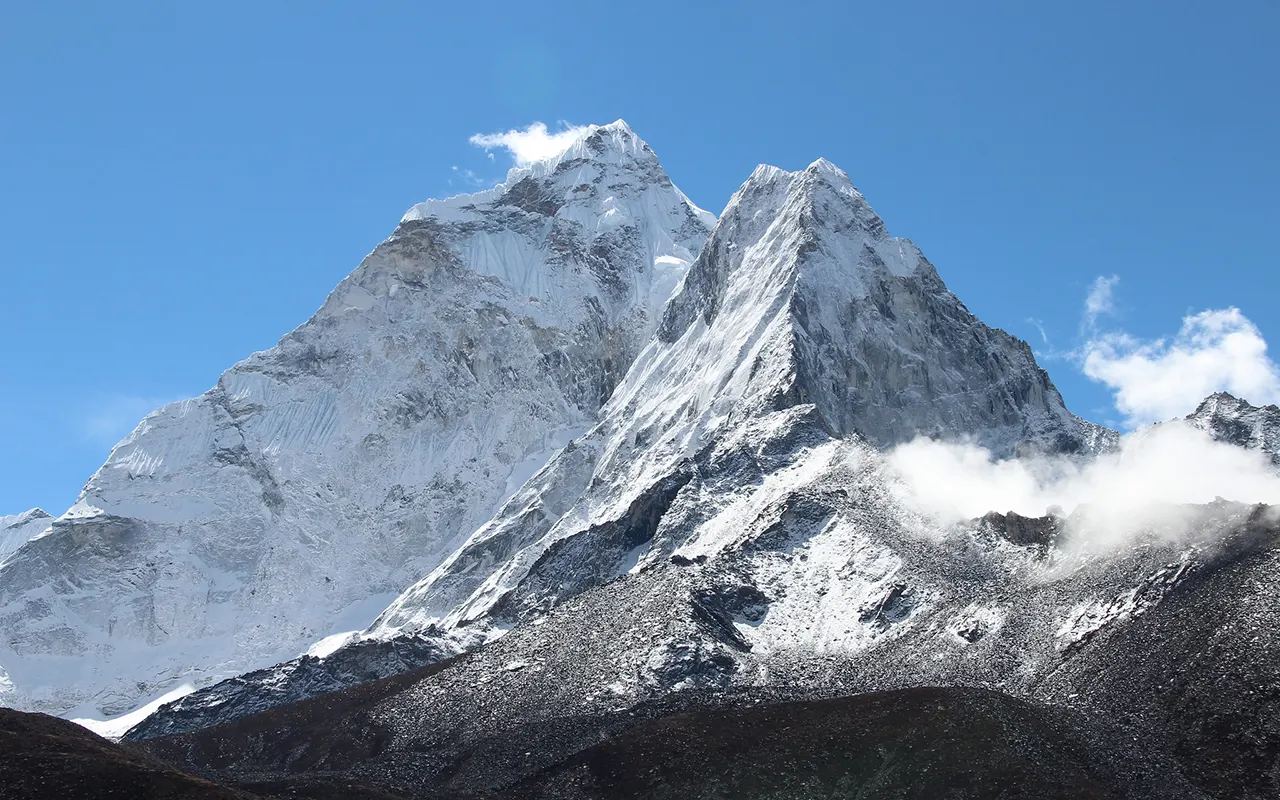
  • Reaching the foothills of the Himalayas and exploring the base of the tenth-highest snow-capped marvel in the world, Mt. Annapurna
  • Traverse across the culturally immersive trekking trails through the charming Gurung, Magar, Thakali, and Loba ethnic groups.
  • Incredible natural allurements of the region and the opportunity to explore the Annapurna Conservation Area (est. 1985)
  • Captivating views of the Himalayan peaks like Annapurna South, Annapurna I, II, III, IV, Machapuchare, Manaslu, Lamjung Himal, and Dhaulagiri
  • Authentic teahouse trekking experience
  • Diverse landscapes, trekking across terraced farms, bright rhododendron forests, charming waterfalls and rivers, alpine meadows and glacial moraines
  • Breathtaking 360° of the surrounding peaks in the Annapurna region during the flight back to Pokhara

Overview

Annapurna Base Camp Trek With Helicopter Return is a remarkable journey in the Himalayas that combines the classical trekking route in the Annapurna region with modern convenience. This thrilling adventure takes you to the base region of the tenth-highest mountain peak in the world, Mt. Annapurna [8,091 meters/ 26,545 feet], and adds a thrilling ride back via helicopter in your exploration.

You might already be familiar with the natural marvels of the second most popular region in the Himalayas. But, with this unique adventure package, you can relish the region’s magnificence from a bird-eye perspective. Annapurna Base Camp Trek With Helicopter Return is a perfect Himalayan exploration package if you are looking for a milder form of adventure to explore its north-central prospects.

The Annapurna Base Camp Trek is one of the world’s most sought-after base camp adventures. Thus, adding the exhilarating helicopter flight back will make the experience even more extraordinary. Thanks to the return trip cut-off by the chopper flight back to Pokhara, the overall difficulty level and duration of the expedition also drastically decrease. This makes this trekking package an ideal exploration opportunity for anyone wary about the long duration and difficulty level of the Himalayan trekking adventures.

Best Time for Annapurna Base Camp Trek With Helicopter Return

As this incredible Himalayan exploration includes a helicopter return flight, it is essential to choose a season with stable weather and clear visibility. Setting this adventure for September to November (autumn) and March to May (spring) will secure an optimum experience.

These are the peak seasons for mountain expeditions and Himalayan trekking adventures in Nepal. The region’s climate is stable during these times, and the temperatures are suitable for high-altitude explorations.

Even among these peak seasons, spring, in particular, outshines autumn with its incredible natural allurements. This season marks the pinnacle of nature, and the trekking trails are decorated with stunning colourful visuals. (The temperature of Annapurna Base Camp during spring is around 8 °C- 31 °C).

Conversely, Autumn is popular for its clear visibility, dry trails, stable climate, unique shades of the fall season, and festive ambience. Annapurna Base Camp Trek With Helicopter Return in the autumn season will add a cultural experience and the fascinating beauty of the harvest season to your excursion. (The temperature of Annapurna Base Camp during spring is around 31 °C —10 °C.)

See also: What is the Best Time for Annapurna Base Camp Trek?

Annapurna Base Camp Trek With Helicopter Return - Detailed Itinerary

Day 01

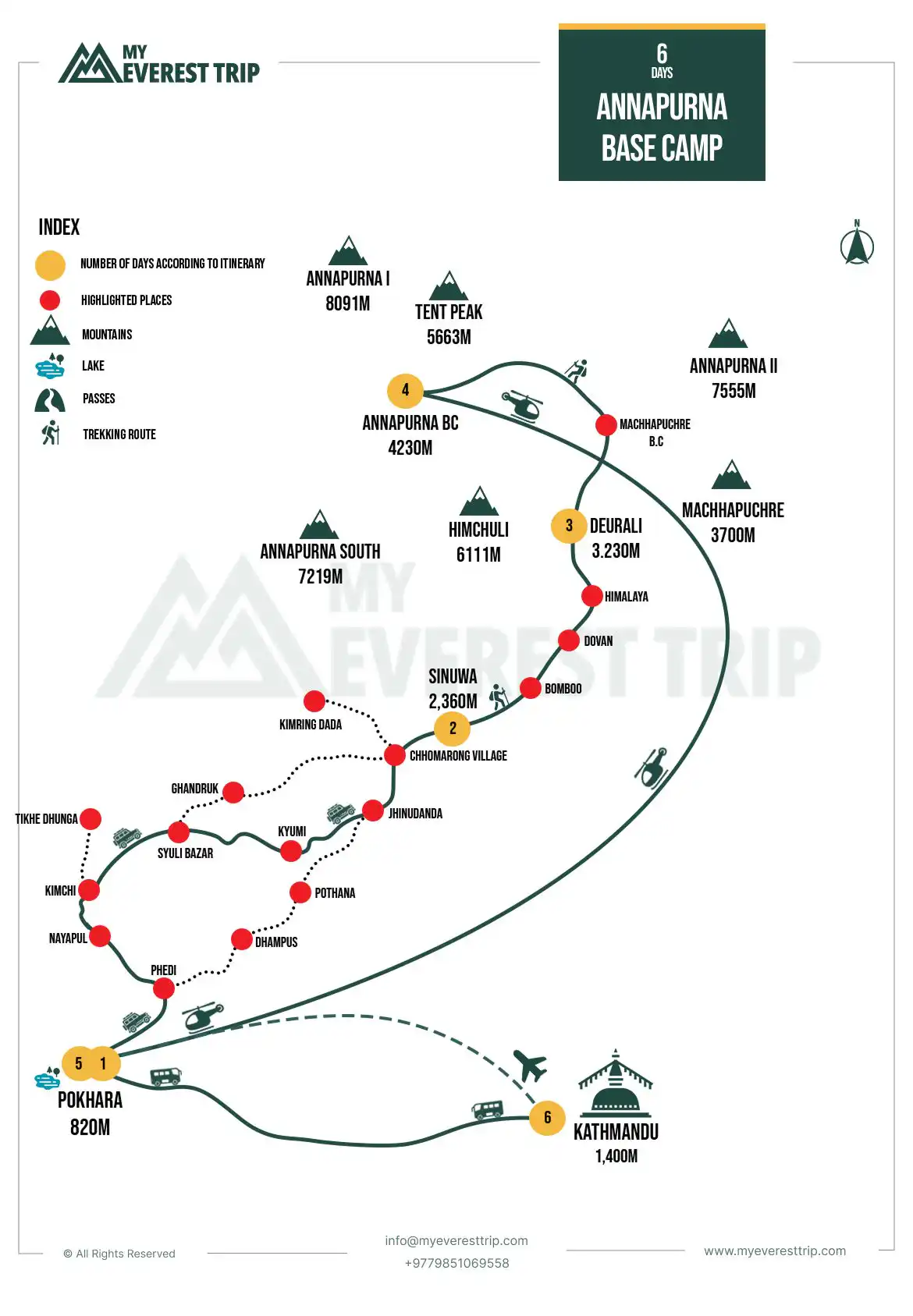
Kathmandu to Pokhara bus drive

This day’s driving adventure will mark the start of your incredible Himalayan journey. After a warm breakfast in Kathmandu, you will get on a luxurious tourist bus and head toward the west side of the valley.

You will pass magnificent landscapes that comprise high hills, lush forests, charming waterfalls, and soaring rivers on this day’s drive. Following the driving trail alongside the Marsyangdi and Trishuli Rivers, you will head toward the major tourist hub of Nepal.

Pokhara is a vibrant and beautiful city that is known for its remarkable lakes. This city is also a popular trek starting point for adventures in the Annapurna region. You will be greeted by the stunning views of Machapuchare, Manaslu, Lamjung Himal, and Dhaulagiri after you reach the city.

Itinerary Details
Itinerary Fact Details
Meals
Breakfast
Accomodations
Hotel
Highest Altitude
1,400 m / 4,593 ft

Day 02

Dive from Pokhara to Jhinu Danda by jeep and trek to Sinuwa

Leaving the hustle and bustle of this tourist destination, you will head toward the trekking point in your trekking adventure. After breakfast, you will take a jeep ride to Jhindu Danda on this day.

You will drive past the lovely settlements of the lower Annapurna region, like Nayapul, Birenthanti, and Siwai, to reach Jhindu Danda. However, your adventure doesn’t end here; after stretching for a bit and taking a short break, you will continue toward the rest point of today’s trek.

From Jhinu Danda, you will trek through the dense sub-tropical forest decorated with a wide variety of rhododendron trees. The incredible views of Machapuchare and Annapurna South appear in front of you as you ascend to higher altitudes in your route.

Although you may not see the Modi Khola from your trekking route on this day, you will hear its soaring resonance that echoes on the serene hills. After 4-5 hours of relatively easy trekking, you will finally reach the beautiful village of Gurung and Magar ethnic group, Sinuwa Village.

Itinerary Details
Itinerary Fact Details
Meals
Breakfast, Lunch, Dinner
Accomodations
Teahouse
Trek Distance
5 km / 3.1 miles
Highest Altitude
1,180 m / 3,871 ft
Trek Duration
3hrs

Day 03

Trekking from Sinuwa to Deurali

This is another exciting day’s adventure in your exhilarating Himalayan exploration. After breakfast at Sinuwa, you will first make your way toward the Upper Sinuwa through lush bamboo, oak, and rhododendron forests.

Then, you will follow the trails through the scenic landscapes that stretch all the way to Khuldigar Village. From here, you will make your descent to Bamboo and follow the enchanting trails across Dovan and Himalaya to reach your destination for tonight, Deurali.

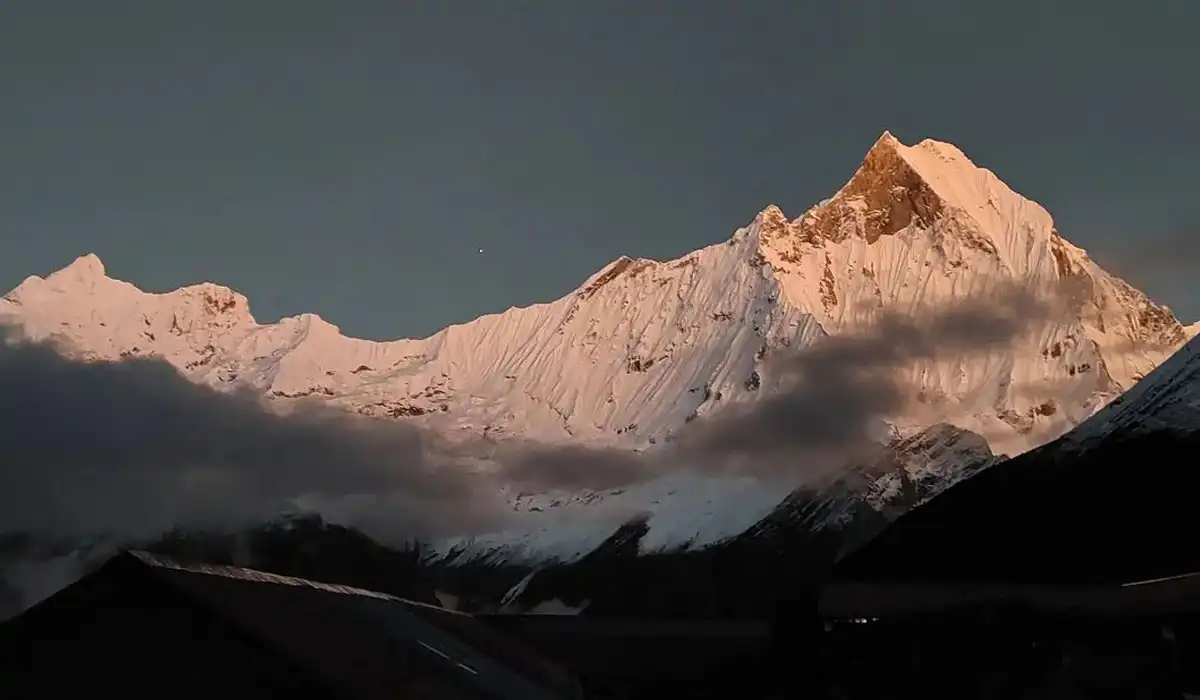
Deurali is a small settlement enroute to Annapurna Base Camp Trek with few teahouses. From here, you can relish the spectacular beauty of Annapurna and Machapuchare as you turn in for the night.

Itinerary Details
Itinerary Fact Details
Meals
Breakfast, Lunch, Dinner
Accomodations
Teahouse
Trek Distance
10 km / 6.2 miles
Highest Altitude
2,100 m / 6,890 ft
Trek Duration
5hrs

Day 04

Deurali to Annapurna Base Camp

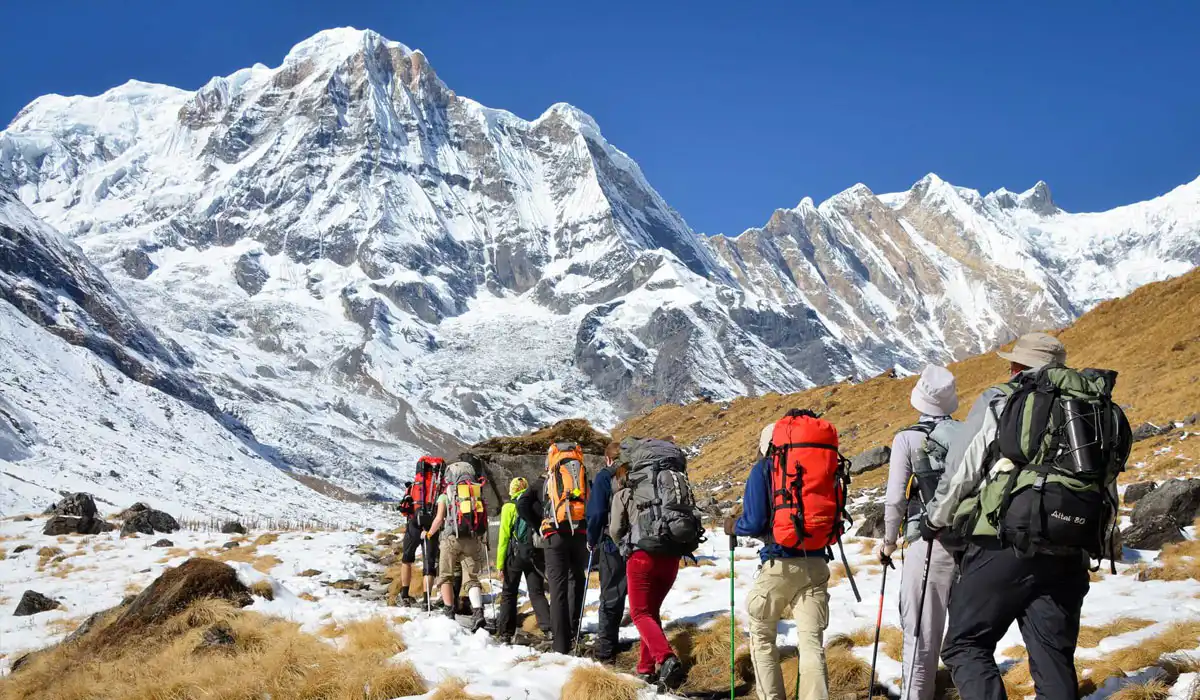
You trekking on this day will pass through the Annapurna Sanctuary and you will be mostly trekking close to the Annapurna Glaciers. The climate also starts to get chillier as you head close to the base of the mountain, so make sure to wear warm clothes for this day’s adventure.

After trekking for about 2-3 hours, you will first reach the Machapuchare Base Camp (MBC), which is situated at an altitude of 3,700 meters (12,139 feet). You will take a lunch break here, enjoying the incredible Himalayan ambiance. Then, moving further in your ascending trail to the northwest, you will push for Annapurna Base Camp.

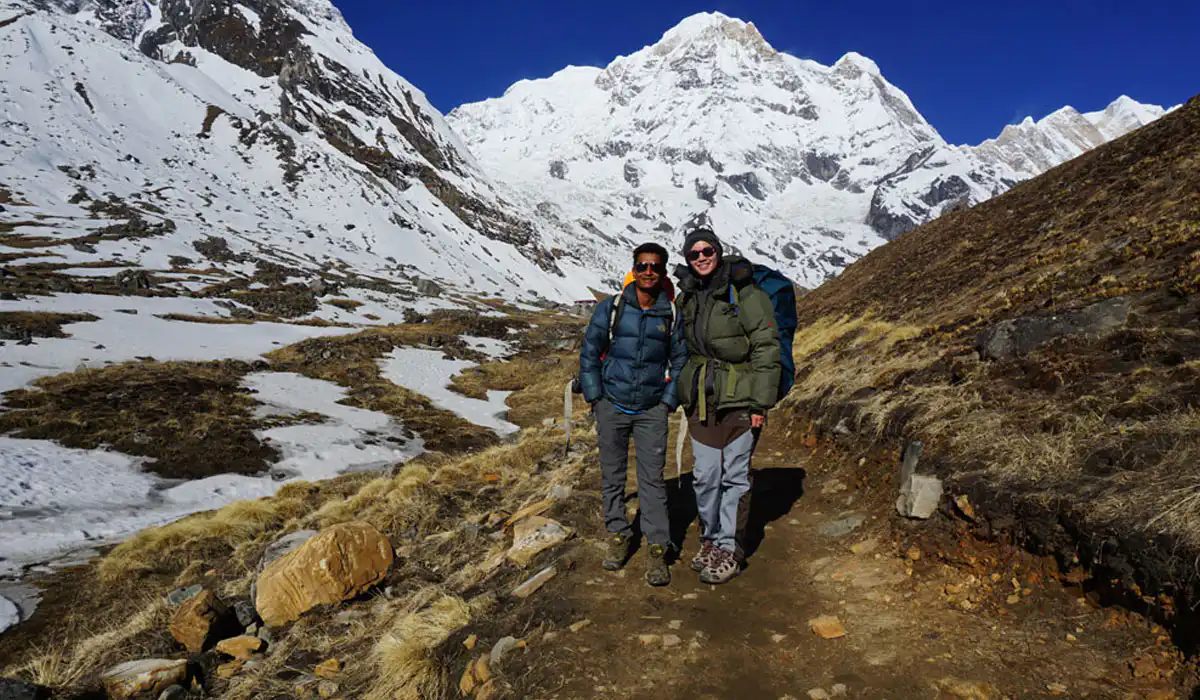
From ABC, you will witness the 360° panoramic views of the Himalayan peaks like Machapuchare, Hiunchuli, Annapurna South, Annapurna I, Annapurna II, Gangapurna, Tent Peak, Tilicho, Pisang and other surrounding peaks.

Relishing the true Himalayan magnificence at the foothills of these stunning peaks, you will rest here tonight.

Itinerary Details
Itinerary Fact Details
Meals
Breakfast, Lunch, Dinner
Accomodations
Teahouse
Trek Distance
7 km / 4.3 miles
Highest Altitude
4,130 m / 13,549 ft
Trek Duration
4hrs

Day 05

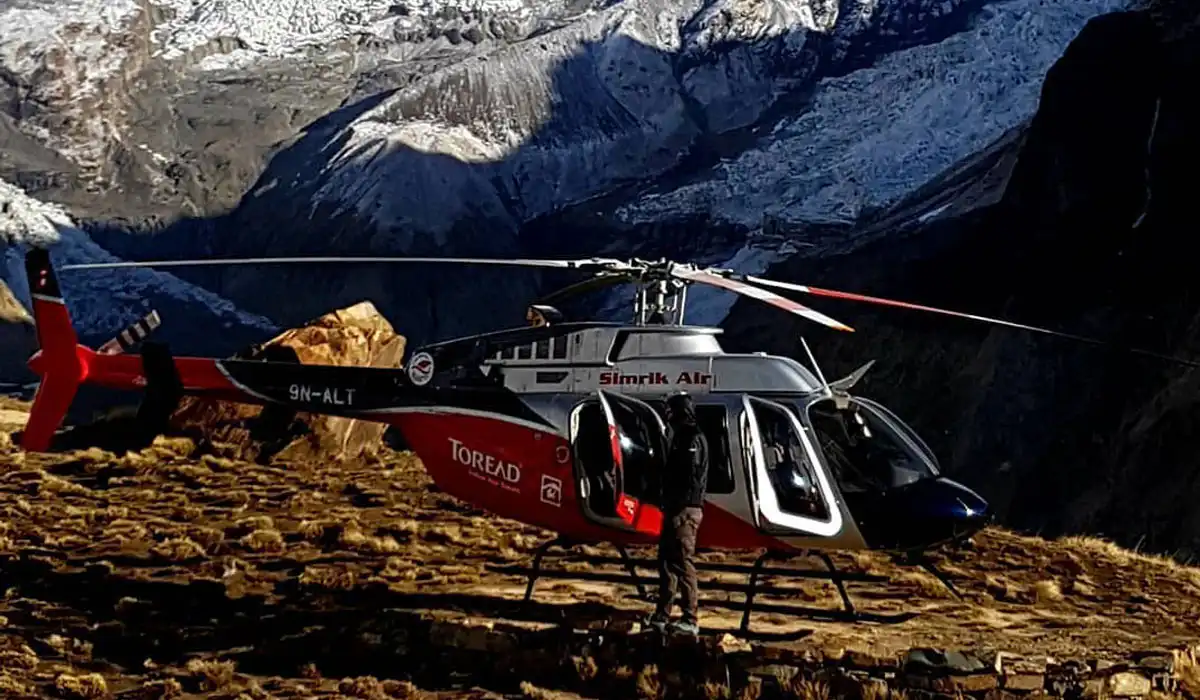
Helicopter flight back from base camp to Pokhara

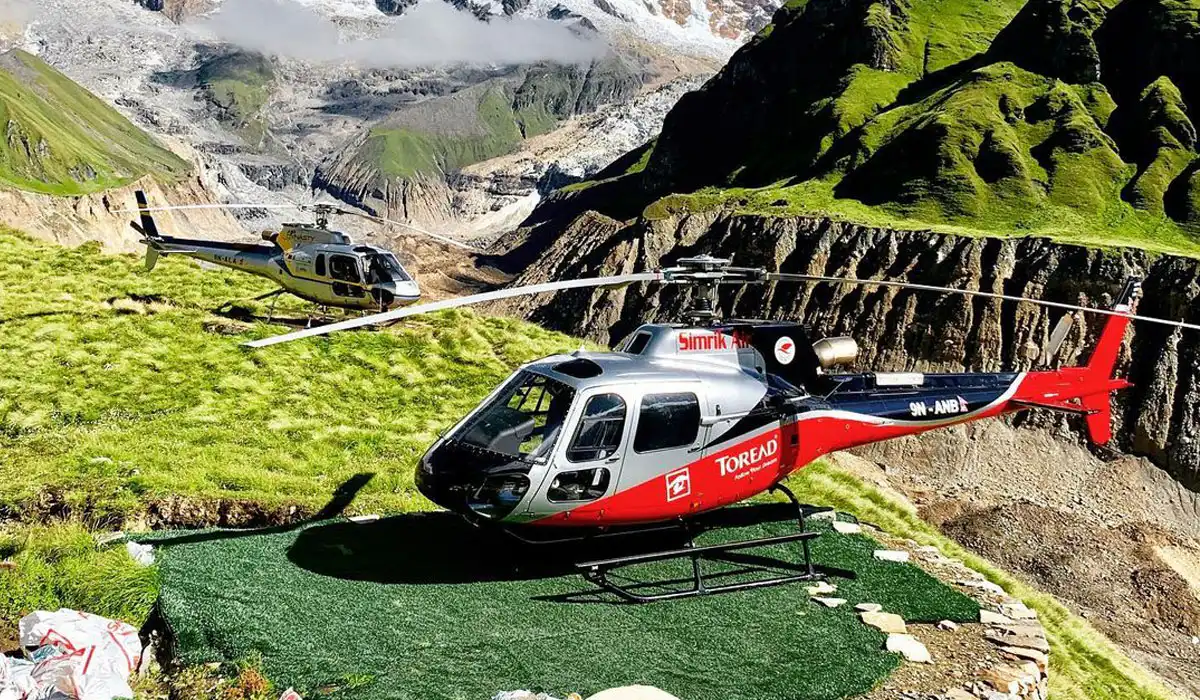
Today, after enjoying a warm breakfast enjoying the serenity of these pristine peaks in the Himalayas, you will take a helicopter ride for your trip back to Pokhara. But, before that, you will take your time relishing the magnificent aerial views of the Himalayas from a bird-eye perspective.

This will be the most magical day in your exciting Himalayan adventure. The breathtaking views of the 6,000 to 8,000-meter class pristine Himalayan massifs from the sky will be something you will treasure for life. Then, after concluding your journey, you will fly down to Pokhara.

After landing at Pokhara, you will have a leisurely day. You can use this time to do sightseeing around the popular landmarks of the city, boat riding or paragliding. Today, you will be able to enjoy the comfort of the modern amenities as you settle in for the night at this tourist hub.

Itinerary Details
Itinerary Fact Details
Meals
Breakfast, Lunch, Dinner
Accomodations
Hotel
Highest Altitude
4,130 m / 13,549 ft

Day 06

Pokhara to Kathmandu bus drive

After completing the Annapurna Base Camp Trek With Helicopter Return, on this day, you will wrap up your remarkable exploration. You will drive back to Kathmandu in a luxurious tourist bus, enjoying the incredible natural scenery.

You will be transferred back to your respective hotels after reaching Kathmandu. Thank you for trekking with My Everest Trip; we hope to see you again. Safe journey!

Itinerary Details
Itinerary Fact Details
Meals
Breakfast
Accomodations
Hotel
Highest Altitude
1,400 m / 4,593 ft

Annapurna Base Camp Trek With Helicopter Return Altitude Chart

Altitude in:

Temperature Chart for Annapurna Base Camp Trek With Helicopter Return

What To Expect?

What's included

  • Airport/hotel pick up and drop off by private car.
  • Two nights 3-star hotel in Kathmandu / Pokhara Bed and Breakfast plan
  • Meals on the entire board (breakfast, lunch, and dinner) during the whole trekking
  • Kathmandu – Pokhara – Kathmandu By tourist bus or up to your request
  • Trekking map
  • An experienced Government license holder guide
  • Insurance, salary, equipment, transportation, local tax for guide.
  • Group medical supplies (first aid kit will be available)
  • All necessary paper works and national park entry permits
  • Travel and rescue arrangement
  • TIMS (Trekkers’ Information Management System)
  • All government taxes and tourist service charges

What's not included

  • Meals in Kathmandu before and after trekking
  • Your travel insurance ( Rescue )
  • Tips for trekking staff and driver
  • Drinks (hot, cold, and alcoholic)
  • Personal shopping and laundry etc
  • Personal trekking equipment
  • Trekking porter/Sherpa who will carry your bags during the trekking.

Recommended Packing List for Trek

For Head and Body

  • Sun hat
  • Woolen hat and beanie
  • Scarf, neck gaiter
  • Tshirt, shirt (lightweight)
  • Insulated inner wear
  • Sweater
  • Windproof/waterproof jacket
  • Down jacket for minus degrees
  • Fleece jacket
  • Trekking shorts, cotton pant
  • Lightweight trousers, woolen trousers
  • Waterproof/windproof trousers
  • Gloves (light, woolen, insulated)
  • Several pairs of undergarments

For Foot

  • Comfortable trekking boots
  • Trainer shoes
  • Sandals, slippers
  • Waterproof gaiter
  • Ankle support
  • Socks (light, woolen, insulated)

Personal Hygiene

  • Bar soap
  • Shampoo, conditioner, hair oil
  • Body lotion, sunscreen cream, lip care
  • Deodorant
  • Foot powder
  • Nail clipper
  • Small mirror
  • Tissue paper, toilet paper
  • Wet wipes, face wash
  • Toothbrush, toothpaste
  • First aid box
  • Sanitizer
  • Insect repellent
  • Water purifier

Gears

  • Trekking poles
  • Sleeping bag
  • Duffle bag
  • Packsack
  • Waterproof cover
  • Sunglass
  • Binocular, camera
  • Headlamp
  • Powerbank
  • Map, GPS
  • Journals, magazines, pen
  • Entertainment set
Tripadvisor Reviews
Google Reviews

Additional Information

Is This Trek Difficult?

Annapurna Base Camp Trek is considered a light to moderate adventure in the Himalayas. Its lower elevation points make it less demanding than other high-altitude base camp adventures.

Furthermore, in Annapurna Base Camp Trek With Helicopter Return, you will fly back directly to Pokhara from the base camp without the need to retrace your steps back on the trekking route. Therefore, this exciting trekking package is undoubtedly more comfortable and easier than the standard ABC trekking package.

You will kick-start this trek after a scenic drive from Pokhara to Jhinu Danda (1,780 meters). Annapurna Base Camp (4,130 meters) is the only destination with a significant elevation. However, as you will acclimate properly, this won’t be a big deal either.

The total distance of the ABC trek is around 115 to 130 km (71 to 81 miles). On average, you will trek about 4 to 6 hours to cover the required distance in a single-day itinerary. However, the trek will be slow, so you don’t need to worry about the long hours of hiking either.

Is the Annapurna Base Camp Trek With Helicopter Return for Me?

Annapurna Base Camp Trek with Helicopter Return, without a doubt, is one of the most incredible and rewarding trekking packages in the Himalayas. Thanks to its light and mild difficulty level, anyone can easily partake in this exciting adventure.

You will not require any technical or mountaineering skills to do this trek. You don’t even need to have previous hiking or trekking experience. As you will be returning to Pokhara by helicopter flight, this exciting package will alleviate the physical demands of the return trip. So, even elderly trekking enthusiasts can make this trek.

The success rate of the Annapurna Base Camp Trek is 99% to 100%. If you do some light preparation for the trek and have good health conditions, you can complete this expedition smoothly without any hassles.

Training and Preparation

Although the Annapurna Base Camp Trek With Helicopter Return isn’t physically challenging, it is still a Himalayan trekking experience. Therefore, you will need to make a sufficient effort in your preparation to enhance the comfort of the experience.

The Annapurna region is known for its uphill and downhill sections, which means you will ascend and descend frequently during your adventure. I think you should generally work on your strength and stamina for this excursion. You will trek for long hours and should maintain the strength to carry a backpack at rising altitudes.

Stamina Training Exercises: Running, Jumping Rope, Swimming, Dancing, Rowing, Hiking, Power Walking, Aerobics, Cardio, etc

Strength and Endurance Exercises: Push Up, Plank, Squat, Pull Up, Lunge, Deadlift, Bicep Curl, Glute Bridge, Overhead Press, Leg Raise, Leg Extension, Woodchuck, Hammer Curl, etc

Permits for Annapurna Base Camp Trek With Helicopter Return

You will need two permits to do this exciting trekking adventure in the north-central part of the Himalayas.

  • Annapurna Conservation Area Project (ACAP) Permit
  • Trekkers’ Information Management System (TIMS) Card

Both of these permits are mandatory for trekking in the Annapurna region. As you traverse the region’s protected areas, you must have an ACAP Permit, which costs approximately US$ 30.

The TIMS Card, on the other hand, is required for high-altitude trekking adventures in Nepal. This card enables authorities to track trekkers’ entry points in the region and enhances security features in the event of mishaps. It costs around US$17.

You can get a TIMS Card and an ACAP permit from the Tourism Board office in Kathmandu. The ACAP permit is also available at the Tourism Board Center in Pokhara and the permit counter at Besisahar. However, for a seamless transition and hassle-free experience, My Everest Trip will arrange all the necessary permits for you.

What Kind of Accommodation Can You Expect?

During this exciting 6-day exploration of the enchanting Annapurna region, you will spend 3 nights at the teahouse/lodge and 2 nights in Pokhara City. You will enjoy luxurious accommodations at a star hotel in Pokhara—modern amenities and in-house services are available in the country’s major tourist hub.

The teahouse’s accommodation facilities are also moderate. The region’s locals typically run most teahouses and lodges, so that in-house services may be limited.

You will stay in a comfortable and warm room as part of a standard trekking package. During your stay, you will receive clean, fresh bedding, a cosy mattress, blankets, and pillows. There are modern bathroom facilities with showers at the lower trails. However, the facilities may be limited as you trek to higher altitudes.

Food and Beverages

The Annapurna region is known for its culturally enthralling trails, and the food and beverage lineup is pretty exciting. In this remarkable exploration of the Annapurna region, you can taste a wide range of delightful delicacies.

While staying at the Pokhara hotel, you can enjoy fine dining services. However, the teahouses along the trekking trail offer a more culturally immersive and authentic experience of exploring the country’s diverse regional dishes.

In addition to the incredible local delicacies, the teahouses in the Annapurna region also serve a variety of Asian cuisines and international dishes.

Menu for Breakfast: Bread, Toast, Roti, Tibetan Bread, Muesli, Pancake, Pudding, Chapati, Paratha, Salad, Fruits, Oats, etc

Menu for Lunch and Dinner: Dal Bhat, Dhindo Gundruk, Thakali Set, Sel Roti, Samosa, Thukpa, Choila, Pizza, Sandwich, Momo, Chowmein, Steak, Fries, Pasta, etc

Beverages

Besides the incredible delicacies, the Annapurna region offers a diverse range of delightful beverages. During your trekking exploration, you can start the day with warm, refreshing drinks like Tea, Coffee, Milk, Hot Chocolate, and freshly squeezed Fruit Juice.

There are also bottled and canned variants of cold drinks, such as Fanta, Coke, Dew, Mirinda, and Pepsi. However, we recommend avoiding plastic bottles and tin cans, as they harm the environment.

Local drinks like Chang, Raksi, Tongba, and Aila dominate the category of stiff drinks. Branded drinks like Beer, Whiskey, Brandy, and Rum are also available at the teahouses if the local alcohol doesn’t grow on you. But you should drink alcoholic drinks in moderation or altogether avoid them, as they are known to affect the acclimatization process.

Health and Safety

Although this is not a Himalayan trek with majoroints above 4,000-5,000 meters, we will strictly follow proper precautionary measures to ensure the experience is a safe and enjoyable trek altitude gain p.

Your health and safety are our top priority, and we will monitor your health conditions throughout the trek. A government-licensed guide with significant experience in the Annapurna region will lead this remarkable trekking adventure.

They will conduct the health inspection and monitor your oxygen saturation level during the trip. In the event of any health issues or emergencies, your guide will coordinate with the head office to take immediate measures.

My Everest Trip guides are also trained for first-aid response and have received high-altitude training. So, you are safe during your Himalayan exploration and can enjoy the adventure without worrying about anything.

Packing for Trek

In this Himalayan exploration, you will traverse different climatic zones, from sub-tropical regions to alpine altitudes. So, you’ll need to pack the right layers wisely, which is ideal for different climatic zones.

My Everest Trip will provide one porter for two trekkers. The porter’s maximum luggage weight limit is 30 kg (66 lbs), which means the porter will carry a single trekker’s 15 kg (33 lbs) of luggage.

During the trek, you will have to carry extra luggage over the recommended weight limit yourself. So, could you pack as lightly as possible without missing the most essential items?

Recommended Packing List for Trek

For Head and Body

  • Sun hat
  • Woollen hat and beanie
  • Scarf, neck gaiter
  • T-shirt, shirt (lightweight)
  • Insulated inner wear
  • Sweater
  • Windproof/waterproof jacket
  • Down jacket for minus degrees
  • Fleece jacket
  • Trekking shorts, cotton pants
  • Lightweight trousers, woollen trousers
  • Waterproof/windproof trousers
  • Gloves (light, woollen, insulated)
  • Several pairs of undergarments

For Foot

  • Comfortable trekking boots
  • Trainer shoes
  • Sandals, slippers
  • Waterproof gaiter
  • Ankle support
  • Socks (light, woollen, insulated)

Personal Hygiene

  • Bar soap
  • Shampoo, conditioner, hair oil
  • Body lotion, sunscreen cream, lip care
  • Deodorant
  • Foot powder
  • Nail clipper
  • Small mirror
  • Tissue paper, toilet paper
  • Wet wipes, face wash
  • Toothbrush, toothpaste
  • First aid box
  • Sanitizer
  • Insect repellent
  • Water purifier

Gears

  • Trekking poles
  • Sleeping bag
  • Duffle bag
  • Packsack
  • Waterproof cover
  • Sunglass
  • Binocular, Camera
  • Headlamp
  • Powerbank
  • Map, GPS
  • Journals, magazines, and a pen
  • Entertainment set

Electricity and Internet

Most parts of this trek have access to reliable electricity and various internet facilities. But, as you move to higher elevation points, the settlements depend more on solar power.

Regardless, you can charge your devices at the teahouses throughout the trek. However, you must pay an extra fee to reach the teahouses; the cost may vary from US$2 to US$5, depending on the altitude.

In the case of internet facilities, you will be able to use the Wi-Fi services at your resting destination during the trek. The cafes and restaurants around the region also offer internet services, and you will get short breaks during the trek and have plenty of time to reconnect with the world.

Like electricity, you will have to pay an extra US$2 to US$4 to use the internet services at the teahouses or lodges. Mobile networks like Ncell and NTC also offer reliable data packages. If you don’t feel like using shared WiFi, you can opt for these networks; click the following links to check the fresh data packages offered by both networks: Ncell and NTC.

Annapurna Base Camp Trek With Helicopter Return Cost

The cost of the Annapurna Base Camp Trek With Helicopter Return usually ranges between USD 1,100 and USD 1,500 per person, depending on the season, group size, and service level. Since this package includes a scenic helicopter flight from Annapurna Base Camp to Pokhara, it is slightly more expensive than the standard Annapurna Base Camp Trek. Nevertheless, its additional comfort and time-saving justify the price among many travelers.

The cost normally covers lodging at the trek sites, food, and transport in the country, trekking permits and services of an authorized guide. The helicopter return is scheduled on a common basis except when a personal charter is ordered. A local operator can be selected, which will be more coordinated and safe. The ABC Trek with helicopter return is ideal for those who want a shorter Himalayan adventure without compromising on the overall experience.

Distance You Will Cover during the Annapurna Base Camp Trek

The trekking portion of the Annapurna Base Camp Trek With Helicopter Return covers approximately 55 to 65 kilometers in total, depending on the starting point of the trail. Although the classic Annapurna Base Camp Trek involves trekking back along the same trail, this itinerary eliminates the long descent by offering a helicopter return from the base camp.

During the ABC Trek, you walk through beautiful forest trails, charming villages, and alpine landscapes before reaching Annapurna Base Camp at 4,130 meters. Daily distance is medium and controllable and so it is not too challenging to be tackled by moderate fitness trekkers. The total walking distance is minimized because you do not have to walk all the way down. This will enable you to explore the best of the Annapurna region and conserve on time and energy. The ride is still a full-time fun experience although it is not as long in total distance.

Altitude Sickness during the ABC Trek

Altitude sickness is a possible concern during the Annapurna Base Camp Trek With Helicopter Return, especially as you ascend above 3,000 meters. Although Annapurna Base Camp reaches 4,130 meters, it is considered a moderate-altitude trek compared to higher Himalayan expeditions. Majority of the trekkers adapt when the climb is not too rapid and the speed is constant.

The usual symptoms can include headache, mild nausea, fatigue, or shortness of breath. When these symptoms are given adequate rest and hydration, they are normally managed. The ABC Trek itinerary is designed to increase elevation gradually, helping your body adapt naturally to thinner air. Some of the tips include drinking water, applying proper nutrition, and steering clear of alcohol. Your guide will check on your status and give you support when necessary. Through responsible trekking, most of the travelers reach the destination without any hassle or inconvenience.

What Do We Need to Know about the Helicopter Return to Annapurna Base Camp?

The helicopter return is one of the most unique features of the Annapurna Base Camp Trek With Helicopter Return. After spending some time at Annapurna Base Camp, you board a helicopter that takes you directly to Pokhara in approximately 20 to 30 minutes. This brief flight provides spectacular air observations of the Annapurna massif, Machapuchare, and other snow-plated mountains.

The flights tend to have a common basis, and the weather should be clear to enable safe departure. Delays can also be caused by strong wind or visibility in some isolated instances. Weight restrictions are observed strictly in order to operate safely. The helicopter return is important because it causes less physical strain, as there is no need to walk a long down the hill. It also adds a memorable and scenic conclusion to the ABC Trek, making the overall journey more comfortable and time-efficient.

Do We Need Travel Insurance for the ABC Trek?

Travel insurance is highly recommended for the Annapurna Base Camp Trek With Helicopter Return.While the ABC Trek is considered moderate in difficulty, trekking in high-altitude regions always involves certain risks. Proper insurance gives a sense of security and will make sure that help is provided immediately in case of emergency.

Your cover must extend to trekking to a minimum of 4,500 meters. The policy must cover emergency helicopter evacuation, medical care, and hospitalization. The weather in the mountain can occasionally be a source of delays and therefore trip interruption coverage is also applicable. Even though the Annapurna Base Camp Trek is well-established and supported by local infrastructure, unexpected situations can occur. Good travel insurance will help you to be sure that you are also insured and can enjoy your Himalayan adventure.

Why Choose Annapurna Base Camp Trek With Helicopter Return?

The Annapurna Base Camp Trek With Helicopter Return is an excellent option for travelers who want to experience the beauty of the Himalayas within a shorter timeframe and with added comfort. This journey combines the classic Annapurna Base Camp Trek with a scenic helicopter return, making it both adventurous and convenient. It is walking through classic Gurung villages, rich forests, and mountainous scenery before landing at Annapurna Base Camp at 4,130 meters, with the spectacular mountainous scenery.

The helicopter return plays a great role in minimizing the physical strain by eliminating the many meters descent on foot, which may in most cases be tiresome to the knees and the joints. It also saves two to three trekking days compared to the standard ABC Trek. In addition, the flight offers incredible aerials of Annapurna I, Machapuchare and the mountain region. The trekking combined with a beautiful scenic helicopter back is what makes the journey feasible, enjoyable and a worthwhile Himalayan tour to do by a traveler desiring a balanced Himalayan adventure.

ABC Trek With Helicopters Return FAQ

Why Annapurna Base Camp Trek With Helicopters Return?

The Annapurna Base Camp trek with a helicopter return offers a unique and efficient opportunity to explore the stunning Himalayan landscape. This adventure combines the thrill of trekking to the renowned Annapurna Base Camp with the convenience of a helicopter ride back, saving time and energy. It’s ideal for those who want to embark on a thrilling mountain journey while being mindful of their schedule.

Annapurna Base Camp Trek With Helicopters Return Cost ?

The cost of the Annapurna Base Camp Trek with helicopter return varies between $2,200 and $3,000 per person. This package includes all expenses related to trekking, accommodations, and a helicopter ride back to the starting point. It is an excellent option for those seeking a comfortable and efficient trekking adventure in the Himalayas, complete with scenic views.

Is a guide mandatory for the Annapurna Base Camp Trek With Helicopter Return?

While the Annapurna region is not a restricted area, hiring a licensed guide is strongly recommended for safety, navigation, and smooth coordination throughout the trek.A guide ensures safety, proper navigation, and smooth coordination throughout the ABC Trek. They will also help in controlling permits, accommodations and helicopters.

Do we need to carry our own luggage during the ABC Trek?

Porter services are usually available for the Annapurna Base Camp Trek With Helicopter Return. Your main duffel bag can be carried by a porter so that you can walk around with a light daypack. This makes the ABC Trek more enjoyable and less physically demanding.

Do we have medical facilities on the Annapurna Base Camp route?

There are small health posts in some of the lower villages along the trail, but the facilities are basic. But there are few facilities and particularly on elevations. In the serious medical cases, evacuation to Kathmandu or Pokhara may be necessary.

What currency should we carry during the ABC Trek?

The only currency that is accepted on the trekking route is Nepalese Rupees (NPR). Teahouses do not usually accept foreign currencies and cards. Before the trek, it is recommended to withdraw or exchange enough money in Pokhara.

Is prior trekking experience required for the Annapurna Base Camp Trek With Helicopter Return?

Previous trekking experience is not compulsory but good physical health is required. The ABC Trek involves several days of uphill walking at moderate altitude.First-time trekkers are able to make the journey successfully with preparation and a gradual pace.

Do we cross any suspension bridges during the ABC Trek?

Yes, the Annapurna Base Camp Trek includes several suspension bridge crossings over mountain rivers.These bridges are firm and well maintained and crossing them is easy and secure. They also provide exquisite perceptions of the valleys and water falls around them.

Are there ATMs available during the Annapurna Base Camp Trek With Helicopter Return?

There are ATMs in Pokhara before the start of the trek.However, once you start the ABC Trek, ATM access becomes very limited or unavailable. During the trek, it is recommended to bring enough cash in Pokhara to meet the personal expenses.

Is tipping mandatory during the ABC Trek?

Tipping in Nepal is not compulsory, but it is a common practice, which is greatly appreciated in the trekking industry. Guides and porters work hard to ensure your comfort and safety throughout the Annapurna Base Camp Trek. A tip is a friendly way of saying that you are grateful to the service in case you are delighted.

Can vegetarians or vegans join the Annapurna Base Camp Trek?

Yes, the vegetarian and vegan food is also very common in the trekking path. The majority of teahouses have plant-based products, including rice, vegetables, lentils, noodles, and soups. It is also good to explain your eating habits of preference to your guide beforehand.

Is there mobile network coverage during the ABC Trek?

In most of the lower parts of the trail mobile network has coverage. The signal can become weak or even unavailable in some regions with increase in elevation. The coverage is based on the weather and service provider.

Are there laundry services available during the ABC Trek?

Laundry services are not commonly available once you begin the Annapurna Base Camp Trek. There might be basic hand-washing facilities available in some of the lower villages, but they are few. It is advisable to bring fast drying clothes and handwash works, in case of need.

Can I bring a drone during the Annapurna Base Camp Trek With Helicopter Return?

The special government permission is necessary to fly drones in Annapurna. The usage of unauthorized drones is limited and can be fined or seized. In case you want to carry one, then you should get appropriate permits beforehand.

Does Pokhara have a luggage storage in the trek?

Yes, most hotels in Pokhara provide luggage storage for trekkers during the ABC Trek. Before the trek, you can securely leave any extraneous items behind. This will assist in taking you on the road in a lighter and comfortable way.

At what time of the day does the helicopter normally leave Annapurna Base Camp?

Helicopter flights are usually planned in the morning when weather is more favourable. Nevertheless, timing is dependent on the visibility, and the wind at the base camp. The flight will be coordinated by your guide depending on the safest time possible.

Are there any cultural customs we should respect during the ABC Trek?

Yes, in the process of walking in villages, you should observe the local customs and traditions. Wear simple clothes, do not take pictures of people without their permission, walk in circles around monasteries and flags of prayers. Cultural respecting improves your experience and helps to interact with local communities positively.

Is there a weight limit for porters during the ABC Trek?

Yes, the porters in the Annapurna Valley have controlled weight restrictions to remain safe and fair. In most cases, a single porter will be walking with luggage of two trekkers, within a specified range of weight. Responsible packaging is used to give the trekkers and porters a comfortable time.

Is it possible to spend some more time in Pokhara after the trek?

Yes, you can easily extend your stay in Pokhara after finishing the Annapurna Base Camp Trek With Helicopter Return. There is a lot of recreational activity in Pokhara which includes boating in the Phewa Lake, paragliding and sight seeing. Give notice to your operator in case you want to change your return schedule.

What type of terrain can I expect on the ABC Trek?

The Annapurna Base Camp Trek includes a mix of stone staircases, forest trails, rocky paths, and alpine terrain. There are places of relative ascending climbs and places of slow ascending paths followed along river valleys. The path is marked and frequently traveled by trekkers.

How early should I book the Annapurna Base Camp Trek With Helicopter Return?

Early booking is recommended, particularly during the high season, like spring and fall. The availability of helicopters may be limited by weather and demand. It is also easy to book permits, accommodation and flight arrangements through early bookings.

Is solo trekking allowed on the Annapurna Base Camp Trek?

According to the existing laws, individual climbing without a licensed guide cannot be done in the Annapurna region in general. A guide will provide safety, good navigation, and adherence to local regulations. Guided trekking also enhances the overall experience of the ABC Trek.

Related Trips

Go to Link
Moderate 5.0 (172)

Short Annapurna Base Camp (ABC) Trek

US$550

8 Days in Nepal

Go to Link
Moderate 5.0 (179)

Annapurna Base Camp Trek

US$725

12 Days in Nepal

Go to Link
Moderate 5.0 (171)

Classical Annapurna Circuit Trek – 10 Days

US$750

10 Days in Nepal

Recent From Our Blog

Places of attractions, travel tips, news and more.

Go to Link
Last Minute Booking For Everest Base Camp Trek

Blog

Last Minute Booking For Everest Base Camp Trek

Last Minute Booking for Everest Base Camp Trek offers a 12-day itinerary for the Everest Base Camp trek, providing a convenient option for last-minute bookings.…

Read the full post
Go to Link
sunset

Places

Bardiya National Park Vs Chitwan National Park – Which is Better?

Wildlife tourism in Nepal is expanding. Travelers are now looking beyond Himalayan trekking to explore Nepal and its diversity, making wildlife tourism grow rapidly. The…

Read the full post
Go to Link
Everest

Blog

Everest Climbing Routes: A Complete Guide to Every Way to the Summit

Mount Everest, standing at 8,849 meters, is the highest mountain on Earth. It is called Sagarmatha in Nepal and Chomolungma in Tibet and has been…

Read the full post
Go to Link
Animals That Live On Mount Everest

Blog

Animals That Live On Mount Everest : Wildlife of the World’s Highest Mountain

Introduction: Life Above the Clouds Mount Everest, the highest peak in the world with an altitude of 8849m, is often depicted or imagined as a…

Read the full post