Everest Gokyo Ri Trek

Nepal

11 Days

US$1,150

This trip includes

Ground transportation in Nepal

Hotels & tea-house accommodation

All meals except in Kathmandu

Local flights cost covered in the itinerary

Guided tour & trek throughout the trip

1 - 20

Kathmandu - Lukla - Gokyo Ri - Lukla - Kathmandu

Autumn, Spring

Moderate

Nepal

5,357 m

Major Experiences during Everest Gokyo Ri Trek

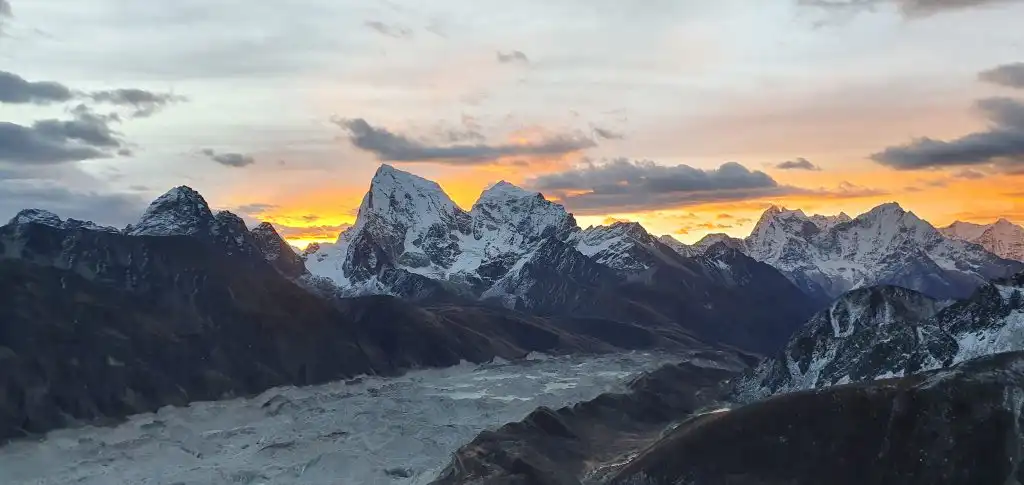
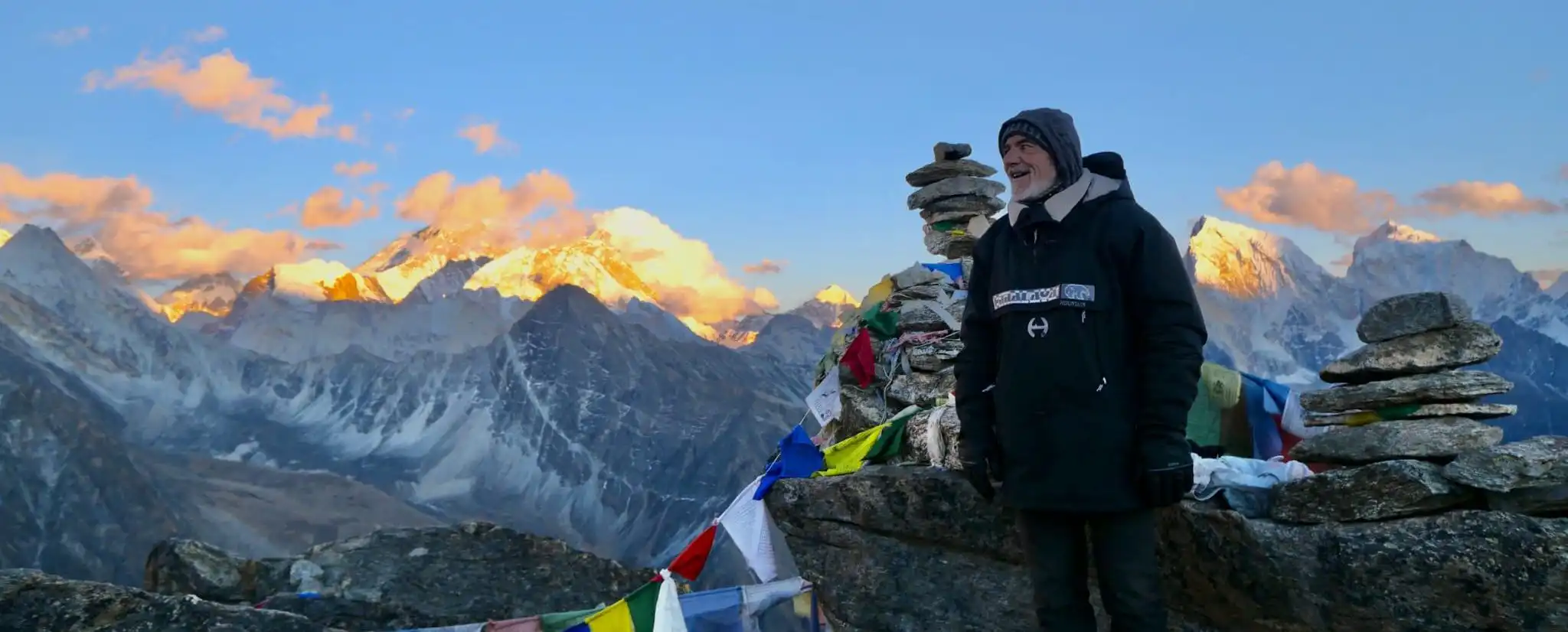
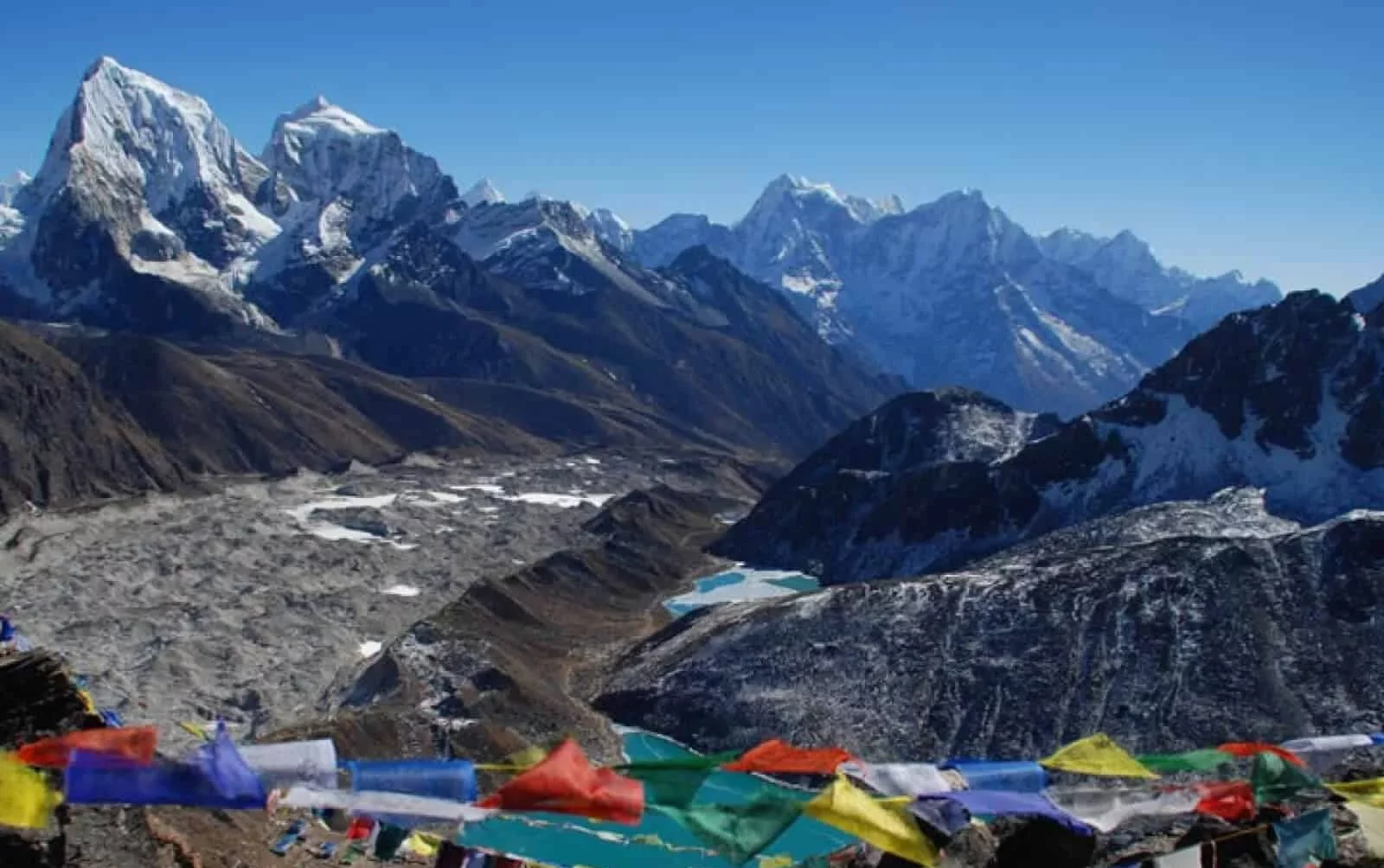
  • Reach Gokyo Ri (5,360 m) for wide views of four 8,000 m peaks, Mount Everest (8848.86 m), Lhotse (8,516 m), Makalu (8,485 m), and Cho Oyu (8,188 m).
  • Visit the remote Gokyo village, located at 4,790 m.
  • Cross Ngozumpa Glacier (22KM), the longest glacier in the Himalayas.
  • Observe Sherpa settlements that are only accessible on foot.
  • Experience challenging landscapes from forest to alpine to glacial zones.
  • Reach elevations where altitude acclimatization is essential.
  • Trek through Sagarmatha National Park, a UNESCO World Heritage Site.
  • Pass through remote settlements like Dole and Machhermo.

Everest Gokyo Ri Trek Overview

If climbing Everest isn’t on your bucket list, how about hiking next to it instead without risking frostbite or bankruptcy? The Everest Gokyo Ri trek is a high-altitude journey that takes you to Gokyo Lakes and Gokyo Ri. This trek offers close views of four of the world’s tallest mountains: Everest, Lhotse, Makalu, and Cho Oyu.

This trek is ideal for those who want an adventurous and less crowded alternative to the real Everest Base Camp route. Because it involves a longer and more challenging path via Gokyo Valley, which attracts fewer first-time trekkers. About 20-25% of trekkers visiting the Everest region choose this route, while the majority follow the classic EBC trail.

The region is home to Sherpa villages where Tibetan Buddhist traditions are part of their daily life. Prayer flags, mani walls, and chortens line the path, and the Gokyo Lakes are considered sacred by both Buddhists and Hindus. Likewise, you’ll pass through Sagarmatha National Park, a World Heritage Site. It gives you a chance to spot wildlife like Himalayan tahr, musk deer, and alpine birds like Himalayan monal, grandala, hill pigeon, etc.

Since you need to fly to Lukla for this trek, there’s a newly popular route that bypasses Lukla entirely, which can be an optional route for you if you’re going by yourself. Instead of taking a flight, you can drive from Kathmandu to Phaphlu, then hike via Surkhe and Phakding to Namche Bazaar. However, it may add an extra 2-3 days to your trek.

If you want a high-altitude trek with glacier valleys, sacred lakes, and fewer people on the trail, this is it. The Everest Gokyo Lake trek offers maximum space to walk, climb, and explore without the Base Camp rush.

Everest Gokyo Ri Trek Itinerary

Day 01

Fly from Kathmandu to Lukla, trek to Phakding

Your journey to 11 Days Everest Gokyo Ri Trek begins with an early morning flight between (6:00-10:00 AM) from Kathmandu to Lukla (2,800 m). Lukla is a small town known as the gateway to Everest. After landing, porters will come to meet the group, and you’ll start walking through Chheplung village, where you’ll see first views of Kusum Kanguru (6,367 m). Then you’ll follow the Dudh Koshi River and cross your first suspension bridge at Thado Koshi.

Around midday, you’ll reach Ghat and continue walking through pine forests and pass painted mani walls before crossing the Kusum Khola. As you reach Phakding, you’ll see Rimishung Monastery on a nearby ridge. This short first day helps your body to start adjusting to altitude and marks the official start of your trek through glaciers, lakes, and high mountain valleys.

Note: During peak months such as March, April, May, September, October, and November. The flight to Lukla is most likely to operate from Manthali (Ramechhap district) due to air traffic. So you may need to drive 5 to 6 hours early in the morning to catch the flight to Lukla. 

Itinerary Details
Itinerary Fact Details
Meals
Breakfast, Lunch, Dinner
Accomodations
Teahouse
Trek Distance
9 km / 5.6 miles
Highest Altitude
2,800 m / 9,186 ft
Trek Duration
3hrs

Day 02

Trek from Phakding to Namche Bazaar

You’ll start the day by walking along the Dudh Koshi River, which is around 130KM long. You’ll pass through Totok and Benkar villages, where you can see the Thamserku (6,608 m) mountain on the hill. After crossing a suspension bridge, you’ll reach Monjo (2,835 m), the entry point of the Sagarmatha National Park. Here, your permits will be checked before continuing through Jorsalle.

From Jorsalle, you’ll move forward and cross the Hillary Suspension Bridge, the highest bridge on the trail, and begin a climb through rhododendron forest. Along the stretch, if the sky is clear, you may catch a glimpse of Mt Everest. By late afternoon, you’ll reach Namche Bazaar, the main trade and cultural center of the Khumbu region and a key stop on the Everest Gokyo Ri trip.

Itinerary Details
Itinerary Fact Details
Meals
Breakfast, Lunch, Dinner
Accomodations
Teahouse
Trek Distance
10 km / 6.2 miles
Highest Altitude
3,440 m / 11,286 ft
Trek Duration
5hrs

Day 03

Acclimatization Day in Namche Bazaar

On this day of the Gokyo lake trekking, you’ll stay in Namche Bazaar (3,440 m) to help your body adjust to the higher altitude. In the morning, you’ll hike up to the Everest View Hotel (3,880 m), one of the highest altitude hotels in the world. On the way, you’ll pass through Syangboche Airstrip (3,780 m), which serves as a backup landing site for small aircraft. From the hotel viewpoint, you’ll see a wide mountain range including Everest, Lhotse, Ama Dablam, and Thamserku.

After the hike, you’ll return to Namche for lunch and spend the rest of the day exploring the village. You can visit the Sherpa culture museum and National Park Visitor Center, which explains the local traditions, geography, and history of the Everest region. The shops and bakeries in Namche provide a place to rest and refuel.

Itinerary Details
Itinerary Fact Details
Meals
Breakfast, Lunch, Dinner
Accomodations
Teahouse
Trek Distance
4 km / 2.5 miles
Highest Altitude
3,880 m / 12,730 ft
Trek Duration
3hrs

Day 04

Trek from Namche Bazaar to Dhole

After spending a full day in Namche, you’ll begin the trek towards Kyangjuma. After some time, you’ll reach Sanasa and take the upper trail that leads towards Mong La (3,957 m), from where you can see Ama Dablam and Kangtega (6,782 m). You’ll descend to Phortse Thenga (3,680 m), a riverside area beside the Dudh Koshi River. This point marks the entrance into the Gokyo Valley.

After crossing Phortse, you’ll cross a wooden bridge over the river and start the uphill section through forests. You’ll pass through the Thenga settlement and continue your walk to Dhole, a village from where you can see Taboche Peak (6,495 m). Overnight at Dhole.

Itinerary Details
Itinerary Fact Details
Meals
Breakfast, Lunch, Dinner
Accomodations
Teahouse
Trek Distance
12 km / 7.5 miles
Highest Altitude
3,957 m / 12,980 ft
Trek Duration
6hrs

Day 05

Trek from Dhole to Machhermo

On the fifth day of the trek, you’ll start the day from Dhole (4,200 m) and follow the trail that passes through the small settlements of Lhabarma (4,330 m), and then reach Luza (4,390 m), where you can witness Cho Oyu (the sixth highest mountain in the world. You’ll see yak pastures and small chortens as you gain height slowly.

By midday, you’ll reach Machhermo, the place known for the 1974 incident involving a reported Yeti sighting. Here you can rest and explore the valley for the rest of the day. The Himalayan Rescue Association post in Machhermo also gives a daily talk about altitude safety, which is important on the Everest Gokyo Ri trekking route.

Itinerary Details
Itinerary Fact Details
Meals
Breakfast, Lunch, Dinner
Accomodations
Teahouse
Trek Distance
10 km / 6.2 miles
Highest Altitude
4,470 m / 14,665 ft
Trek Duration
5hrs

Day 06

Trek from Machhermo to Gokyo

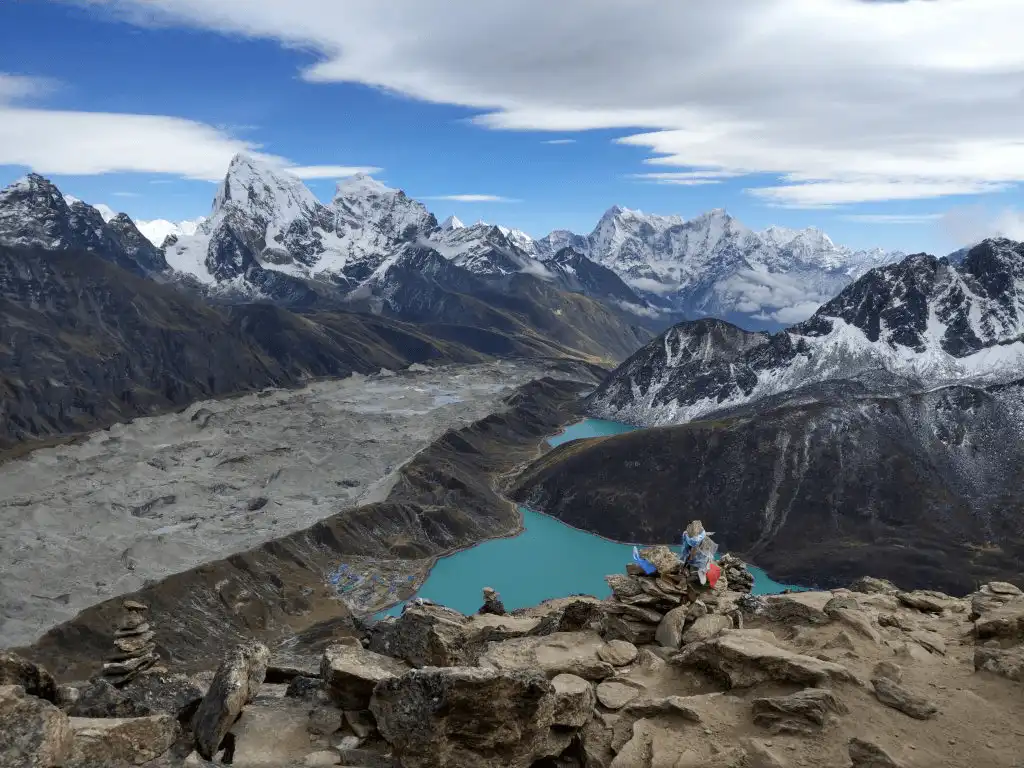
Early in the morning, you’ll begin the trek from Machhermo and follow the Dudh Koshi River. After a short descent, you’ll pass through Pangka (4,390 m). From here, you’ll witness the terminal moraine of the Ngozumpa Glacier, the longest glacier in Nepal, around 36 km long. You’ll then cross a bridge over a stream and continue upward to the first Gokyo Lake, known as Longpongo Tsho (4,690 m).

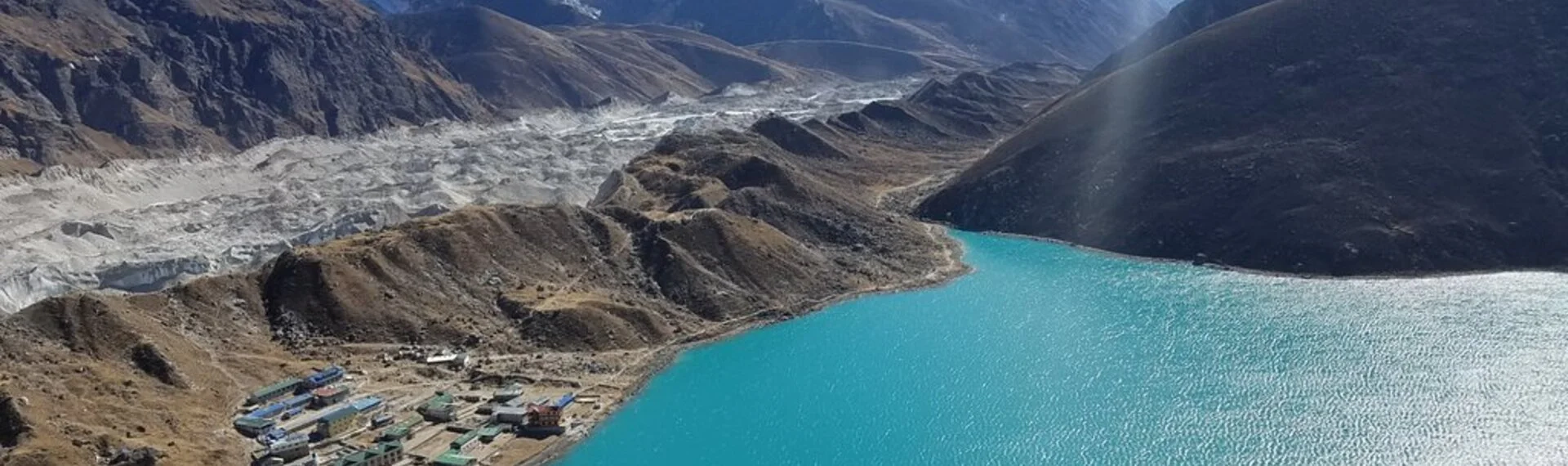
You’ll pass through the second lake, Taboche Tsho (4,710 m), and by midday, you’ll reach the third lake, Dudh Pokhari (4,790 m), beside which lies the village of Gokyo. This settlement is situated under Cho Oyu, and from here, you can witness the upper part of the Ngozumpa Glacier.

Itinerary Details
Itinerary Fact Details
Meals
Breakfast, Lunch, Dinner
Accomodations
Teahouse
Trek Distance
12 km / 7.5 miles
Highest Altitude
4,790 m / 15,715 ft
Trek Duration
4-5hrs

Day 07

Explore Gokyo Valley, Climb Gokyo Ri, and hike to the fifth lake

This day is all about exploring the Gokyo region. You’ll start the morning early with a climb to Gokyo Ri (5,360 m). From the top, you’ll witness panoramic views of four of the world’s highest peaks they are: Everest, Lhotse, Cho Oyu, and Makalu, as well as the full Ngozumpa Glacier. After spending some time at the summit, you’ll descend back to Gokyo.

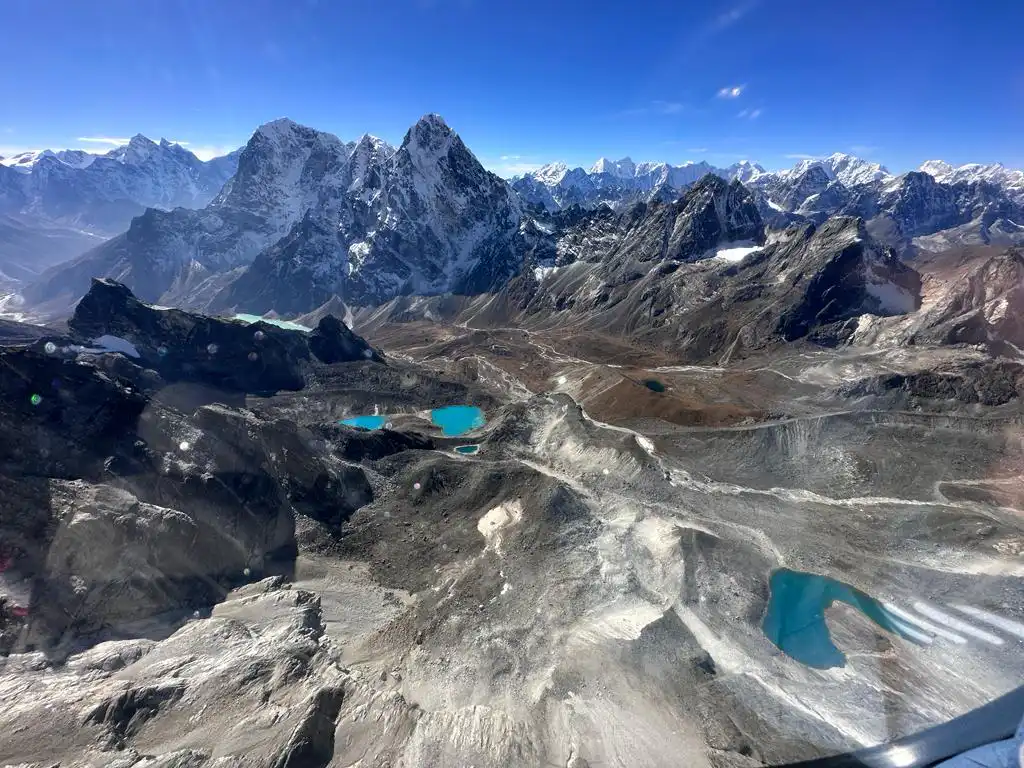
By midday, you’ll hike north towards the fourth lake, Thonak Tsho (4,840 m), and then reach the fifth lake, Ngozumpa Tsho (4,980 m). From here, you’ll witness close-up views of Cho Oyu. The lakes are fed by glacial melt from the upper Ngozumpa basin.

After exploring the area, you’ll return to Gokyo village for the night. This day in the Everest Gokyo Ri trek itinerary gives you both high-altitude views and glacier-lake exploration in one full day.

Itinerary Details
Itinerary Fact Details
Meals
Breakfast, Lunch, Dinner
Accomodations
Teahouse
Trek Distance
14 km / 8.7 miles
Highest Altitude
5,360 m / 17,585 ft
Trek Duration
7hrs

Day 08

Trek from Gokyo to Dhole

Today, you’ll begin your descent from Gokyo by tracing the same trail beside the Dudh Pokhari lake before moving down the western part of the Ngozumpa glacier. As you lose elevation, you’ll pass through the stone-walled pasture of Gokyo and reach Phangka.

From Phangka, you’ll continue toward Machhermo, observing the beautiful views of Cho Oyu to the north. From Machhermo, you’ll descend further past Luza to reach Dhole (4,200 m). This part os the Everest Gokyo Ri trek route allows you to exit the high alpine zone and prepare for lower altitudes.

Itinerary Details
Itinerary Fact Details
Meals
Breakfast, Lunch, Dinner
Accomodations
Teahouse
Trek Distance
15 km / 9.3 miles
Highest Altitude
4,790 m / 15,715 ft
Trek Duration
7hrs

Day 09

Trek from Dhole to Namche Bazaar

From Dhole, you’ll descend towards Luza by passing the trails above Dudh Koshi. After a short walk, you’ll reach Phortse Tenga, where two rivers, the Dudh Koshi and its tributaries, converge. The trail leads you toward Mong La, where you can observe peaks like Ama Dablam and Thamserku closely for the last time.

From Mong La, you’ll walk through the forest to reach Kyangjuma. From here, you’ll witness the confluence of trails that go toward Tengboche and Everest Base Camp. You’ll then continue toward Namche Bazaar (3,440 m), where you’ll again reconnect to the popular routes of the Everest region.

Itinerary Details
Itinerary Fact Details
Meals
Breakfast, Lunch, Dinner
Accomodations
Teahouse
Trek Distance
14 km / 8.7 miles
Highest Altitude
3,957 m / 12,980 ft
Trek Duration
6hrs

Day 10

Trek from Namche Bazaar to Lukla

Leaving the Sherpa hub, you’ll descend towards the Hillary Suspension Bridge. After crossing the bridge, you’ll move through villages like Monjo and Jorsalle, where you’ll check out at the Sagarmatha National Park entrance. You’ll again see the meeting point of the Bhote Koshi and Dudh Koshi rivers near Larja Dobhan.

By midday, you’ll reach Phakding and trek through Ghat and Thado Koshi, crossing several suspension bridges. You’ll pass Chheplung before reaching Lukla, where the Everest Gokyo Ri trek completes its circuit.

Itinerary Details
Itinerary Fact Details
Meals
Breakfast, Lunch, Dinner
Accomodations
Teahouse
Trek Distance
19 km / 11.8 miles
Highest Altitude
3,440 m / 11,286 ft
Trek Duration
7hrs

Day 11

Fly back to Kathmandu

Early in the morning, you’ll take a flight from Lukla to Kathmandu. The flight takes a short time and follows the Dudh Koshi Valley, giving you one last glimpse of the Himalayan landscapes you trekked through.

Once you land at Tribhuvan International Airport in Kathmandu, your trek officially ends. After checking in at your hotel, you’ll have the rest of the day free. Many trekkers use this time to rest, explore local markets like Asan or Thamel, or visit cultural places such as Boudhanath or Pashupatinath.

Itinerary Details
Itinerary Fact Details
Meals
Breakfast
Accomodations
Hotel
Highest Altitude
2,800 m / 9,186 ft

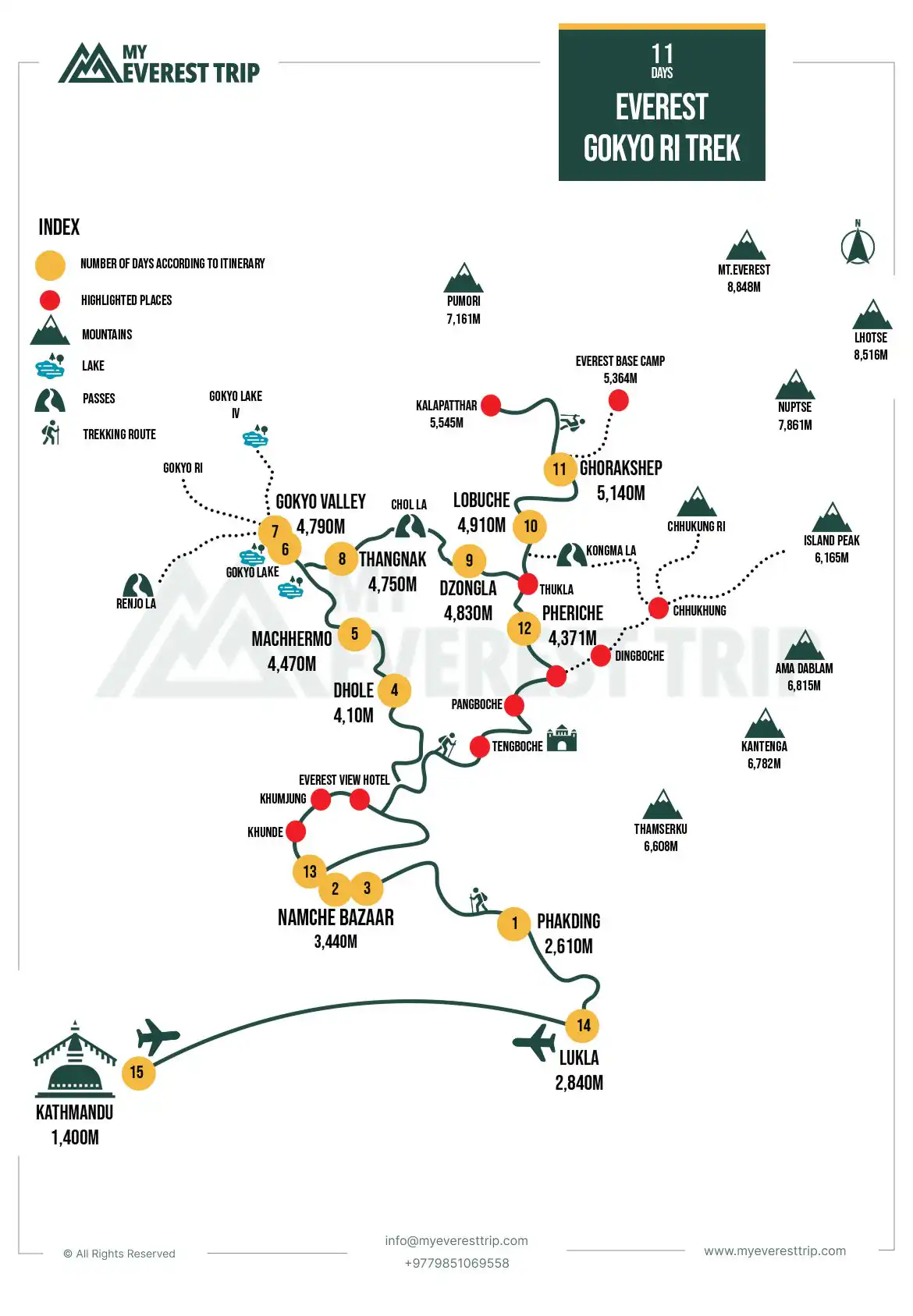
Gokyo Trek Map

Everest Gokyo Ri Trek Altitude Chart

Altitude in:

Temperature Chart for Everest Gokyo Ri Trek

What To Expect?

What's Included

What's Not Included

Airport Pickup and Drop-off Services

  • International arrival pickup
  • Domestic airport drop-off from hotel (Start of trek)
  • Domestic airport Pick-up and transfer to the hotel (After the trek)
  • International drop-off on your final departure day

Accommodations Services

  • 10 nights at local tea houses in the mountains (on a twin-sharing basis)

Trekking Permit

  • Local Government Entry Permit (Trek Card)
  • Sagarmatha National Park Permit (Everest Permit)

Domestic Flights

  • Kathmandu to Lukla flight ticket
  • Lukla to Kathmandu flight ticket

In case of Lukla Flight Via Ramechhap

  • Kathmandu to Ramechhap drive by sharing transportation
  • Ramechhap to Lukla domestic flight ticket
  • Lukla to Ramechhap domestic flight ticket
  • Ramechhap to Kathmandu by sharing a Jeep

Food During Kathmandu/Trekking

  • 10 Breakfast: Local and continental choices from the tea house Menu
  • 10 Lunch: A Simple and light lunch in the lunch camp tea houses
  • 10 Dinner: Veg and Non-Veg Meals of your choice, Nepalese and continental foods from the local tea house Menu

Guide/Porter Services and Their Liabilities

  • First-aid kit box carried by our team
  • Trekking guide – English-speaking licensed guide with 10 + years of experience.
  • Insurances for Guide & Porter (Emergency evacuation and accidental medical expenses)
  • All meals for the Guide/Porter
  • Salary as per the company standard rate (which is recommended by the concerned association of the tourism industry)
  • Local sherpa for carrying your luggage up to 20 kg Maximum (2 guests sharing 1 Porter)
  • Travel and Rescue Arrangements

  • Meals in Kathmandu before and after trekking,
  • Your travel insurance ( Rescue )
  • Nepal entry visa fee.
  • Tips for trekking staff and driver
  • Drinks (hot, cold, and alcoholic)
  • Personal shopping, laundry, etc
  • Personal trekking equipment.
Tripadvisor Reviews
Google Reviews

How much does it cost to go to Gokyo Ri?

Everest Gokyo Ri Trek

The 11-day Gokyo Ri trek costs USD 1,000-1,150 per person, with group discounts available. The cost covers all essential expenses during the trek, including domestic flights between Kathmandu and Lukla, accommodation in teahouses, all meals during the trek, permits for Sagarmatha National Park, and permits for Khumbu Pasang Lhamu Rural Municipality. There are no hidden charges, and the price includes government VAT and all applicable taxes.

Your payment also supports wages for guides and porters, environmental fees that help maintain the Everest Gokyo Ri trek route, and logistics to ensure a safe and smooth trek. This cost breakdown includes everything, so you can focus on the journey without additional or unexpected expenses.

What to Expect In the Everest Gokyo Ri Trek?

The Journey to Gokyo Ri is defined by awe at every turn, with diverse landscapes, high-altitude views, and varied opportunities. Here is what you can expect in the Gokyo Ri trek:

Gokyo Ri at 5,357 m, known for the views of four 8,000 m peaks.

You can expect to climb Gokyo Ri, a trekking peak that is located west of Ngozumpa Glacier. From its summit, you can see Everest (8,8848.86 m), Lhotse (8,516 m), Makalu (8,481 m), and Cho Oyu (8,188 m) in a single view. The climb takes around 2-3 hours from Gokyo village, and the trail consists of steep, rocky parts that require slow pacing.

Machhermo, famous for the historic Yeti Incident of 1974

During this Gokyo Lake trek, you’ll pass through Machhermo. It is located at 4,470 m and is remembered for the reported yeti attack in 1974. According to the local accounts, three yaks were killed and a Sherpa woman was injured during the incident. The story has been preserved in village memory and is often shared by guides while passing it.

Fifth Gokyo Lake at 4,980 m, famous for views of Everest’s north face

You can hike to the fifth Gokyo Lake, located north of Gokyo village, which is also known as Ngozumpa Tsho. It can be reached through the side path of the Ngozumpa Glacier. From its shores, you can view the north face of Everest and other peaks like Gyachung Kang (7,953 m). This lake region is less visited by trekkers and is often quieter than the main village area.

Seasonal birds like the bar-headed goose migrate near Gokyo Lakes

The wetlands around the Gokyo Lakes become a resting point for migratory birds such as the bar-headed goose, black-necked crane, and ruddy shelduck. These migrations are noticed during the pre-monsoon (April to May) and post-monsoon (September to October) periods. The high-altitude lakes provide food and shelter, and sightings add an ecological highlight to the trek.

Tea Houses Around the Trek

The Everest base camp with Gokyo Ri trek is supported by a good network of teahouses that have developed over the past several decades. Villages such as Namche Bazaar, Phakding, Machhermo, and Gokyo have enough teahouses that accommodate trekkers year-round. Teahouse practices were introduced around the 1960s, when trekking in the region became more popular. These lodges provide basic shelter and rest stops, which are crucial for acclimatization and safety at higher altitudes.

Teahouses are spaced approximately 3 to 6 hours apart to create manageable daily trekking segments that adjust with the altitude gain. The teahouses in Gokyo village and Machhermo are located above 4,400 m, which represents some of the highest trekking lodges in the world. Their presence allows you to take a refreshing break and fuel up with nutritious homemade foods.

What makes the Everest Gokyo Ri Trek difficult

The Everest Gokyo Ri trek involves high altitude, ranging from 2,860 m in Lukla to 5,357 m at the Gokyo Ri summit. At 5,300 m, oxygen levels drop to about 50% of what is available at sea level, which puts strain on the body and increases the risk of altitude sickness. The average daily trekking distance on this route is between 8 and 12 km, often covered in 5 to 7 hours over rocky and uneven paths, which increases the difficulty of this trek.

Physical fitness requires good cardiovascular and leg strength to handle trekking with a backpack weighing around 7 to 10 kilograms. You should be able to maintain a steady pace at low oxygen levels and recover well after long days. Weather conditions range from 5°C to -15°C near Gokyo, with snowfall or windstorms common. So, the combination of low oxygen, challenging terrain, variable weather, and extended trekking hours makes this trek somewhat challenging.

Most Favourable Time for Gokyo Trek

The best time for the Everest Gokyo Ri trek is from late September to November and from March to early May. During this month, the region experiences lower rainfall, with average precipitation around 30 to 50 mm per month, humidity levels between 40 and 60%, and cloud cover averaging less than 30%. These conditions provide clear skies, beautiful mountain views, and more stable weather by improving visibility and safety on the trail.

In contrast, the monsoon season from June to August brings heavy rainfall, often exceeding 300 mm per month, with humidity rising above 80%. Winter months from December to February have low precipitation, but temperatures can drop quickly below -15°C near Gokyo. It increases the risk of frostbite and makes trekking more difficult. Therefore, the autumn and spring offer the most reliable weather for completing the trek with manageable climate conditions.

Everest Gokyo Trek Permit

The Everest Gokyo Ri trek requires two main permits: the Sagarmatha National Park Permit and the Khumbu Pasang Lhamu Rural Municipality Permit. The Sagarmatha National Park Permit, established in 1976 by Nepal’s Department of National Parks and Wildlife Conservation, costs USD 30 for foreign nationals and USD 15 for SAARC nationals. Similarly, the Khumbu Pasang Lhamu Permit costs around USD 25 and is issued by the local government to regulate trekking activities in the Khumbu region.

Both permits can be obtained in Kathmandu before the trek or at offices near the park entrance, such as in Monjo. You must carry these permits throughout the journey, as they are checked at various checkpoints like Jorsalle, Machhermo, and Namche. These permits play an important role in managing tourism, supporting conservation efforts, and helping local communities in the Everest region.

Why choose the 11-day Gokyo Trek with us?

Here are some reasons why you should choose the Gokyo Trek with us:

  • We have expert guides with over 10 years of experience on the Everest Gokyo Ri trek.
  • Guaranteed accommodations in teahouses at all stops, including Gokyo and Machhermo.
  • Strongly follow the acclimatization schedule to reduce altitude sickness while trekking.
  • All necessary permits included: Sagarmatha National Park and Khumbu Pasang Lhamu.
  • Daily trekking distances planned between 8 to 12KM, for manageable pacing.
  • 24/7 emergency support and evacuation arrangements in Lukla and Namche Bazaar.
  • Transparent pricing with no hidden fees or unexpected taxes.
  • Comprehensive pre-trek briefing with detailed itinerary and gear advice.

What peaks can you see from Gokyo Ri?

From the summit of Gokyo Ri, you can see several major Himalayan peaks. These mountains are notable for their heights and geographic importance in the Everest region. Here is a list of key peaks visible from Gokyo Ri:

  • Mount Everest (8,848.86 m): Known as “Sagarmatha” in Nepali and “Chomolungma” in Tibetan, it is the highest mountain on Earth.
  • Lhotse (8,516 m): Called “South Peak”, it is the world’s fourth-highest mountain.
  • Makalu (8,485 m): It is considered one of the most difficult 8,000 m peaks to climb.
  • Cho Oyu (8,188 m): Nicknamed the “Turquoise Goddess”, this peak is popular among climbers due to its easier climbing route.
  • Gyachung Kang (7,952 m): It is the least climbed mountain and the fifteenth highest mountain in the world.
  • Tawoche (6,462 m): A prominent mountain near Gokyo.
  • Ngozumpa Kang (7,206 m): A main water source for the Everest region.

Can we Trek to Everest Gokyo Ri during Off-season

Yes, you can trek the Everest Gokyo Ri during the off-season, and doing so has several unique advantages. Trekking in winter or the monsoon offers a chance to experience festivals like Mani Rimdu. It is held in autumn, but preparations and smaller ceremonies can be seen in off months. The trails are quieter and less crowded, which means more opportunity to observe daily life in villages. Off-season trekking also allows you to see the changing landscapes, such as frozen lakes in winter or green valleys during the monsoon.

About 10-15% of the total annual trekkers visit Gokyo Ri during the off-season. But note that off-season trekking demands strong preparation for cold weather, changing trail conditions, and limited teahouse services. If you want to experience a more adventurous journey in the off-season, then try the Everest Cho La Pass trek. It includes high mountain pass like Cho La and requires greater physical and navigational challenges.

Elevation Level and Total Distance

The total distance of Gokyo Ri depends on the specific route taken. Yet, starting from Lukla and ending at Gokyo Ri, it takes 40 to 45 km/ 25–28 miles on a round-trip. Throughout the duration, trekkers pass through different elevations of prominent locations, which are as follows:

S.N. Location Elevation
1 Lukla 2,800 m/9,184 ft
2 Phakding 2,652 m/8,700 ft
3 Namche Bazaar 3,440 m/11,283 ft
4 Dhole 4,110 m/ 13,480 ft
5 Machhermo 4,470 m/ 14,663 ft
6 Gokyo Valley 4,800 m/15,744 ft
7 Gokyo Ri 5,357 m/17,570 ft

How do you get ready for the Gokyo Ri Trek?

Preparing for the Gokyo Ri trek requires physical training, mental readiness, and careful packing. This helps ensure safety, comfort, and a better overall experience during the trek. Below are the key steps to get ready for the journey.

  • Physical fitness: Focus on cardiovascular exercises like running, cycling, or swimming to build stamina. Do strength training for legs, core, and back to handle difficult terrain. Practice hiking with a loaded backpack to simulate trek conditions.
  • Mental preparation: Learn about altitude sickness and its symptoms to recognize early signs. Prepare to stay patient and adaptable in changing weather and trail conditions.
  • Packing essentials: Bring layered clothing suitable for temperatures from -15°C to 10°C, including thermal wear and waterproof jackets. Carry trekking boots with good ankle support. Include important gear such as a sleeping bag, trekking poles, a first aid kit, water purification tablets, and sun protection.
  • Acclimatization plan: Follow the recommended schedule with rest days at key points like Namche Bazaar to allow your body to adjust to altitude changes.
  • Travel logistics: Book flights early, especially the Kathmandu-Lukla sector, prepare for possible weather-related delays, or grab the package from us; we’ll handle everything.

Local Guide & Porters

One of the unique aspects of My Everest Trip is that we provide our clients with a local guide and porter for their trip. We mainly offer local Sherpa guides for expeditions in the Himalayas, who are experienced professionals and known for their bravery. They are familiar with the region’s trails, landscape, and culture. Most of our guides are born and raised in the areas where the trek takes place. They provide complete knowledge of the area’s history, diverse ecosystem, and culture.

Furthermore, our porters come from the area where trekkers should pass through, which can be exhausting, especially in the rugged terrain. They are friendly and hardworking and carry all your backpacks to provide you with ease and focus on the trek. As our porters are local, we aim to support the local economy by hiring them.

If you want to combine a trip like the Gokyo Ri Everest Base Camp Trek, we can customize it.

Meal options during the Everest Gokyo Ri Trek

During the Gokyo Ri trek, several meal options are served in teahouses and lodges along the trail. Items like Dal Bhat, Tibetan bread, pancakes, eggs, potatoes, tea, or coffee are often served at every accommodation. Here is a clear table about food items that’ll be served along the trek.

Breakfast Lunch Dinner
  • Tibetan bread
  • Pancakes (plain, apple, banana)
  • Toast with egg (fried, scrambled, boiled)
  • Porridge (oatmeal, muesli)
  • Chapati
  • Tea/coffee/hot chocolate
  • Dal Bhat (rice, lentil soup, curry)
  • Fried noodles with vegetables/meat
  • Fried rice
  • Sherpa stew (Thukpa)
  • Momos (dumplings)
  • Pasta
  • Dal Bhat
  • Spaghetti
  • Mashed potatoes
  • Vegetable curry
  • fried noodles
  • Pizza
  • Tea or coffee

Everest Gokyo Ri Trek FAQs

What is the origin of the name 'Gokyo'?

‘Gokyo’ comes from the Sherpa language, meaning “five sacred lakes”. The trek passes through this valley, known for its cluster of glacial lakes that hold religious importance to the local Sherpa community.

Are there any endangered species I can spot near the Gokyo region?

Yes, the area is home to endangered species such as the snow leopard and the Himalayan blue sheep (bharal). Sightseeing is rare, but their presence represents the ecological importance of the region.

What is the significance of the Ngozumpa Glacier in regional hydrology?

Ngozumpa Glacier supplies meltwater to the Dudh Koshi River, a major tributary of the Koshi River System. Changes in its volume affect the availability of water downstream for thousands of people who depend on the river for agriculture, drinking water, and hydropower.

What is the record of the lowest temperature recorded near Gokyo during winter?

The lowest temperature recorded near Gokyo during winter was around -20°C (-4°F) during nighttime. Strong winds at high altitude increase the cold, which requires proper clothing and equipment to avoid hypothermia and frostbite during cold weather.

How do the geology and rocky types affect trail conditions on the Gokyo Ri trek?

The trail crosses sedimentary and metamorphic rocks formed by glacial activity. Loose rocks, scree slopes, and moraine ridges are common, which sometimes create unstable trail sections. These conditions require good footwear and proper planning.

Are there endangered medicinal plants I can find around the trail?

Yes, Yarsagumba (Cordyceps sinensis), an endangered medicinal fungus, can be found around the trail. It is highly demandable for traditional medicine, but it has been facing problems currently due to overharvesting.

How do altitude and UV radiation interact on the Everest Gokyo Ri trek?

Higher altitudes have a thinner atmosphere, which increases UV radiation exposure by up to 50% compared to sea level. This raises the risk of sunburn and eye damage; therefore, sun protection is essential for everyone doing such a high-altitude trek.

What time of day can I get the clearest view of Gokyo Ri summit?

The best time for clear visibility at Gokyo Ri summit is early morning between 6 AM and 8 AM. During these hours, wind speeds are lower and cloud cover is minimal, which improves conditions for mountain viewing and photography.

What role does yak herding play in Gokyo Valley communities?

Yak herding provides meat, milk, and transport. Yaks are essential for carrying supplies to remote villages and lodges. Herding supports local livelihoods and cultural practices of the Everest region.

What is the impact of microplastics on the Everest Gokyo Ri trek environment?

The impact of microplastics on the Everest Gokyo Ri trek environment includes contamination of water sources and soil near trekking routes. These plastic particles come from discarded waste and pose risks to local wildlife and ecosystems.

How reliable are weather forecasts in the Everest Gokyo Ri region?

Weather forecasts in the region use satellite data and local observations, but can be unpredictable due to rapid mountain weather changes. You should prepare for storms and temperature shifts even if the forecast shows clear skies.

What are the common altitude sickness symptoms I may experience near Gokyo Ri?

You might experience symptoms like headaches, dizziness, nausea, and fatigue. These appear due to reduced oxygen levels at elevations above 4,500 m and require proper rest and acclimatization to manage.

What vaccines should I take before the Everest Gokyo Ri trek? 

You are recommended to take Hepatitis A and B, Typhoid, Tetanus, and routine childhood immunizations. Some of the trekkers also get the influenza vaccine, and the Yellow fever vaccine is only required if coming from affected countries. Vaccination helps to reduce the risk of common infections in remote areas during the trek.

What common illnesses should I be aware of on the Everest Gokyo Ri trek?

You should be aware of common issues like respiratory infections, gastrointestinal upset, altitude sickness, and minor injuries. Carry a basic first aid kit with basic medications and practice hygiene to minimize this risk.

What emergency protocols are in place for health issues on the trek?

Local guides and agencies have evacuation plans, including helicopter rescue. Communication with health posts is possible via radio or satellite phone. You should carry emergency contact numbers and insurance covering high-altitude evacuation.

Related Trips

Go to Link
Moderate 5.0 (197)

Everest Base Camp Trek

US$1,260

12 Days in Nepal

Go to Link
Easy 5.0 (183)

Everest Short Trek

US$810

5 Days in Nepal

Go to Link
Moderate 5.0 (173)

Everest Three Pass Trek

US$1,865

17 Days in Nepal

Everest Gokyo Ri Trek Blog

Places of attractions, travel tips, news and more.

Go to Link
A Complete Everest Trekking Guide

Everest

A Complete Everest Trekking Guide

Everest Trekking Guide A Complete Everest Trekking Guide is many treks globally, but none are more well-known than the one to EBC. Trekking in the…

Read the full post
Go to Link
Everest Base Camp Trek Packing List for Female

Blog

Everest Base Camp Trek Packing List for Female

Everest Base Camp Trek Packing List for Female? 42% of female trekkers on the Everest base camp trek in 2023. We have listed a trekking…

Read the full post
Go to Link
Gokyo Trek

Trekking in Nepal

Gokyo Trek: Best View Point in Everest Region

Gokyo Trek Everest Himalayas in northern Nepal house an astounding array of natural and cultural landmarks. As such, the Gokyo Lakes are one of the…

Read the full post